
During a product demo, a prospective customer asked us a simple question:
“Do you also have application forms?”
It was the right question.
Before a recruiter can analyse interviews or compare finalists, candidates need somewhere to apply. The company needs to publish the role, collect CVs, review applications and move people through a clear recruitment process.
Growing teams without an ATS still needed a way to publish roles and collect applications. Buying a separate ATS alongside AI Interview Analyzer meant choosing two platforms, connecting them and moving information between them.
That question helped us decide how far we needed to take the product.
AI Interview Analyzer 2.0 is now a full recruitment platform
With version 2.0, companies can run the entire recruitment process in one place.
A recruiter can create a role, publish it on the company’s branded careers page and collect applications through a dedicated form. Candidates can submit their CVs and answer questions defined by the hiring team.
Every application arrives directly in the relevant recruitment, ready for review.
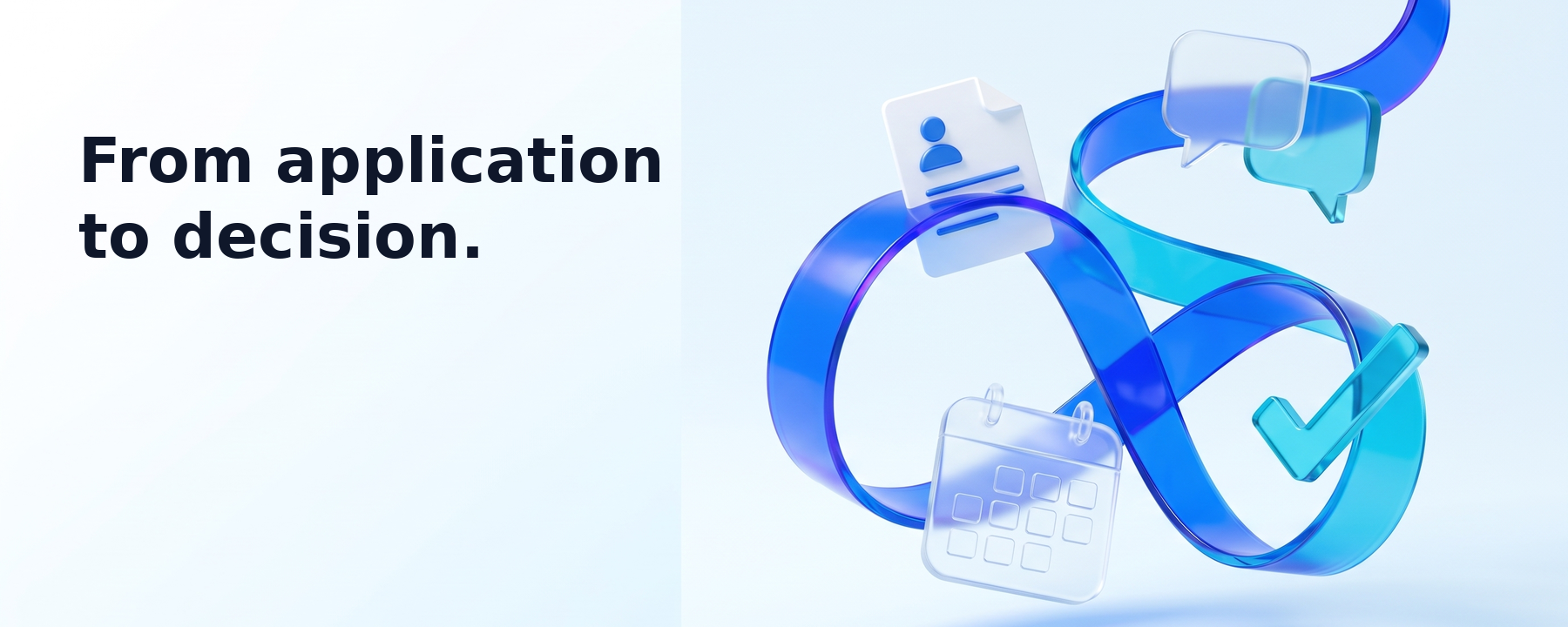
The team can then move candidates through a structured pipeline built around the role. That might include an initial recruiter conversation, a technical interview and a final meeting with the hiring manager.
Recruiters can use a template or configure their own stages. At every point, they can see where each candidate is, what has already happened and what should happen next.
There is no need to rebuild the process across separate tools.
The ATS workflow and interview intelligence are finally connected
Traditional ATS platforms are good at storing applications and tracking statuses. The context often becomes thinner once the interview begins.
Notes live in different documents. Interviewers focus on different criteria. Hiring managers remember the strongest moments, not necessarily the most relevant evidence. Before making a decision, the team first has to reconstruct what happened across several conversations.
AI Interview Analyzer connects the operational workflow with the substance of the interview.
The role requirements inform the evaluation criteria. The criteria shape the interview questions. The interviews produce a structured record. That record supports analysis, candidate comparison, feedback and the next decision.
AI can help the team:
- turn role requirements into clear evaluation criteria;
- prepare relevant interview questions;
- rank CVs against the requirements of the role;
- record and transcribe interviews;
- identify evidence in candidate answers;
- compare candidates who reached the same stage;
- prepare useful feedback for candidates.
All of this happens inside the same recruitment where the applications and interview stages are already managed.

From a job advert to the final decision
Imagine a company hiring a senior software engineer.
The recruiter creates the role, defines the requirements and publishes it on the company’s careers page. Candidates apply through a branded form, upload their CVs and answer the team’s initial questions.
The applications arrive in one recruitment workspace.
AI can help review the CVs against the documented requirements. The recruiter chooses who moves forward and schedules the first conversation.
Before the interview, the team has criteria and prepared questions connected to the role. After the conversation, it has a transcript, a structured analysis and evidence linked to what the candidate actually said.
Candidates who reach the technical stage can be compared at that stage. The hiring manager can see their relative strengths, gaps and trade-offs without searching through separate notes or trying to remember several interviews from the previous week.
When the team meets to make its final choice, the material is already there.
Applications, interview progress, evidence and results remain connected from the first submission to the hiring decision.
AI-native does not mean AI-led
We use the term “AI-native” deliberately.
It does not mean handing recruitment decisions to an algorithm. It means designing the workflow so that AI can support the team wherever information needs to be prepared, organized or examined.
AI helps preserve the interview record. It connects answers with documented criteria. It highlights evidence, supports comparisons and helps prepare feedback.
People remain responsible for deciding who moves forward and who gets hired.
AI Interview Analyzer does not evaluate voice tone, accent, personality or protected characteristics. The analysis focuses on what was said and how it relates to the requirements defined for the role.
Candidate consent and data retention are built into the workflow. The goal is not a black-box selection engine. It is a clearer and more accountable recruitment process.

Candidates should receive value too
A complete recruitment platform should not create value only for the employer.
Candidates invest time, preparation and knowledge in every serious interview. Too often, the process ends with a generic rejection or silence.
The same structured interview record that helps the hiring team make a clearer decision can also support useful candidate feedback.
When the organization offers AI Coach and the candidate opts in, the Candidate Portal gives them private guidance on their strengths, development areas and practical next steps. They can discuss their reports with Rudy and use the insights to prepare for future interviews. This coaching is private to the candidate and separate from the hiring decision.
One interview can therefore create two meaningful outputs: evidence for the hiring team and something useful for the candidate.
One platform or an integration with your existing ATS
Companies starting without an ATS can now choose AI Interview Analyzer as the platform for the full process.
Organizations that already have an established ATS do not need to replace it immediately. Enterprise customers can discuss an integration that imports recruitments and candidates, with the exact scope agreed during onboarding. Standard customers can use the public REST API to build their own integration.
The choice depends on the company’s current setup.
What has changed is that job publishing and application forms are now part of the same recruitment workflow in AI Interview Analyzer.
Built for companies choosing what comes next
Many recruitment systems were designed before AI became part of everyday hiring. AI is now being added to them as another feature, another module or another external tool.
We started from a different place.
We began with the interview itself: the moment when candidates demonstrate their experience and hiring teams gather the evidence needed to make a decision.
Now we have connected that intelligence with the operational process around it.
Companies can publish a role, receive applications, manage a structured pipeline, prepare interviews, analyse conversations and compare candidates in one platform.
That is the shift in AI Interview Analyzer 2.0.
We can now answer the original question with a clear yes.
Yes, we have application forms.
More importantly, we have built the recruitment process that follows them.